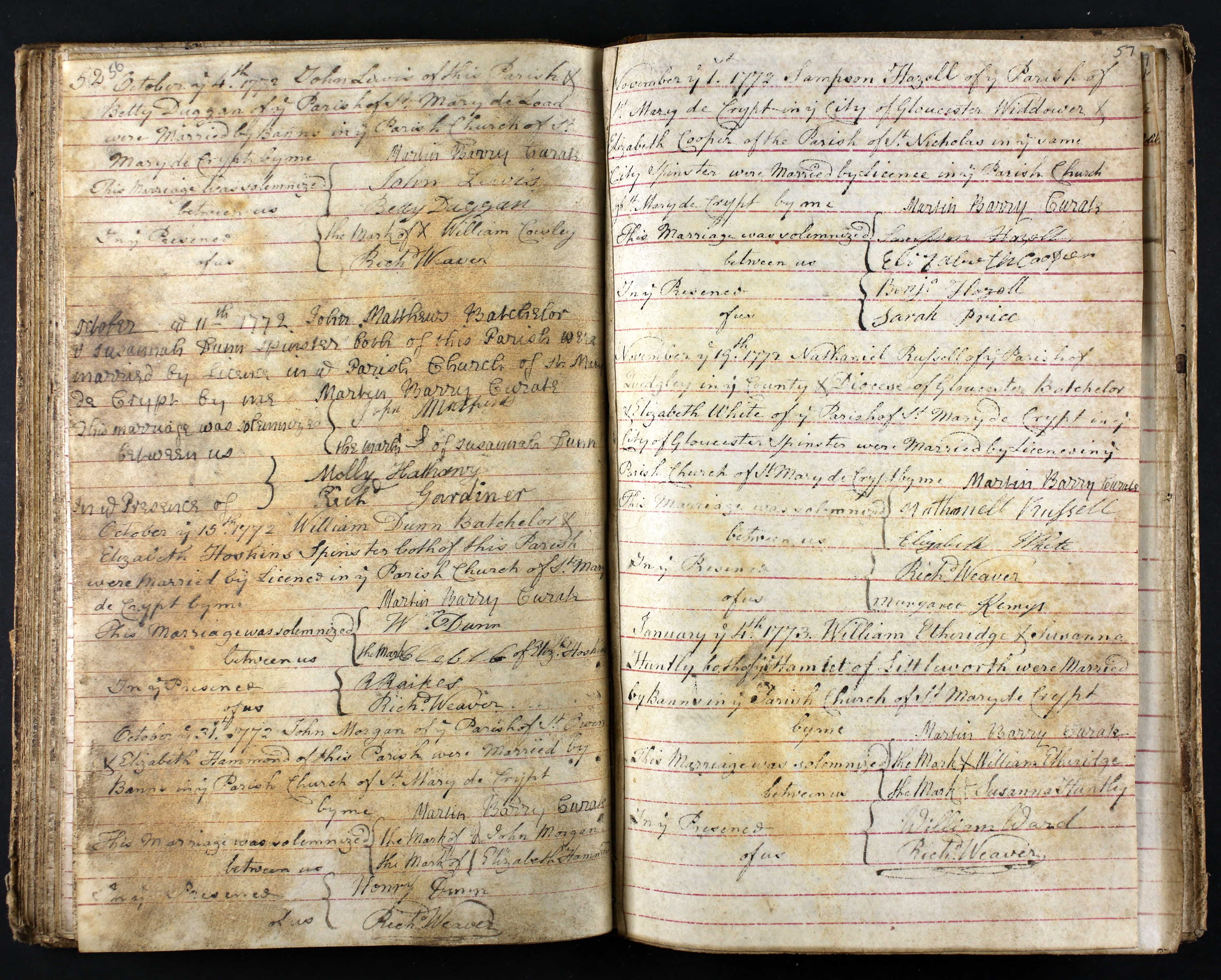
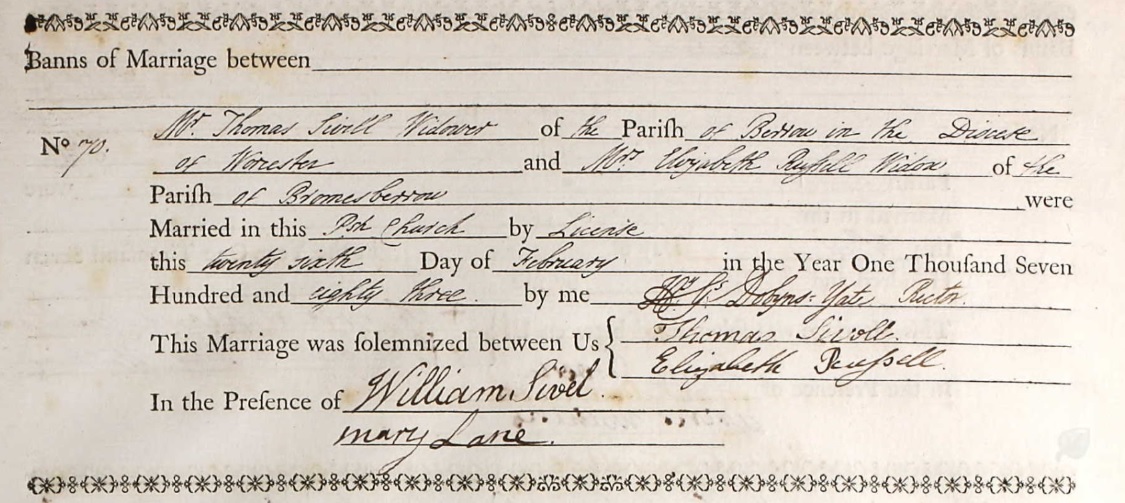
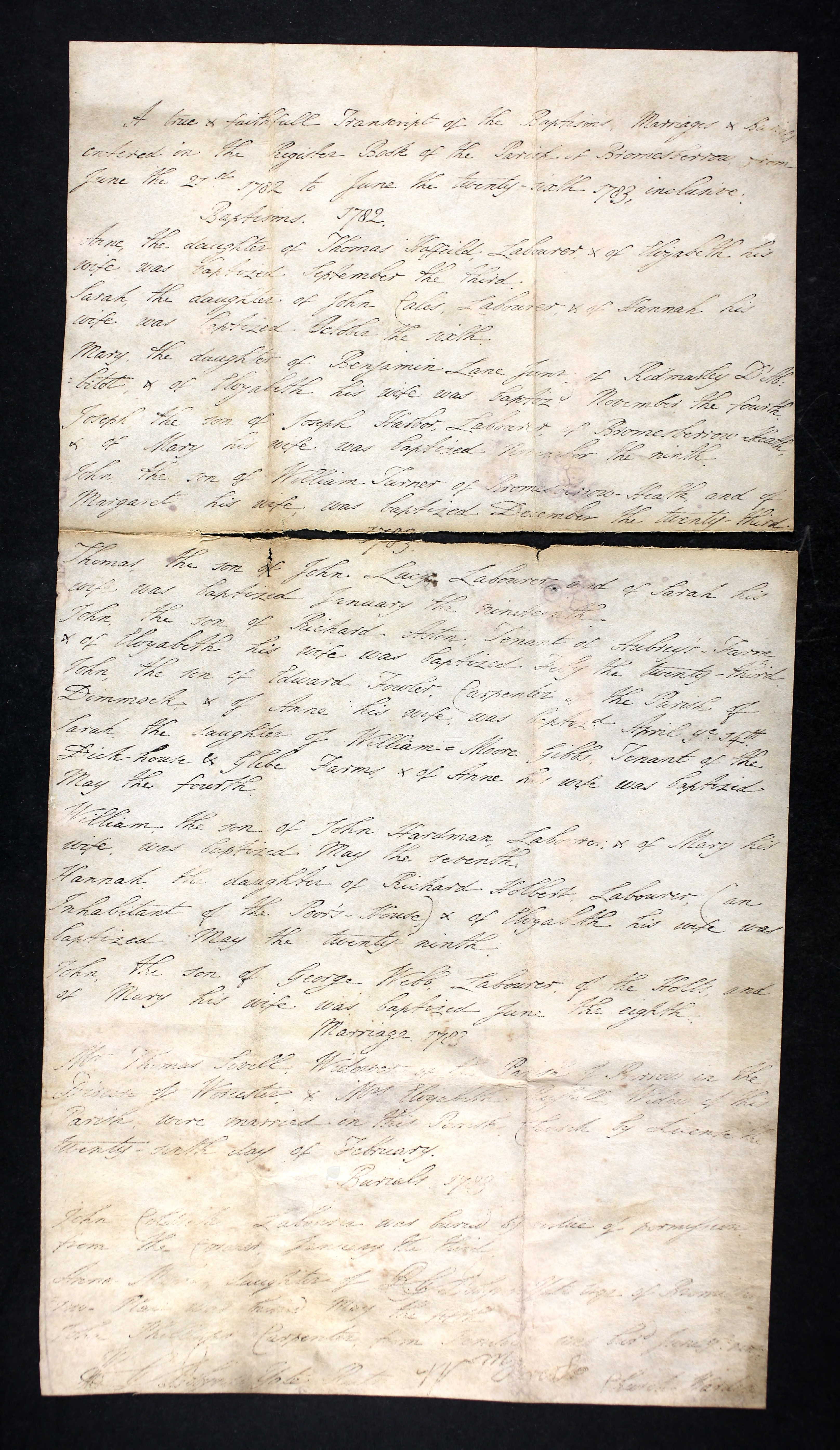
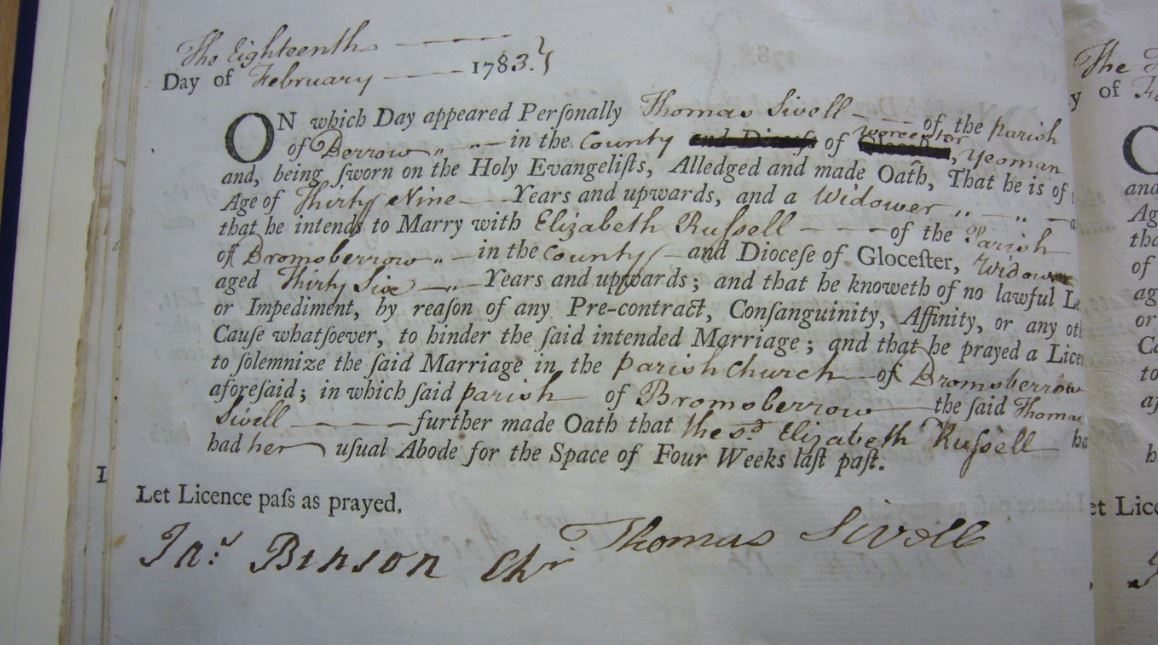
Nathaniel RUSSELL was likely the first husband of Elizabeth WHITE who he married at St Mary le Crypt in Gloucester on 19 Nov 1722. On his wedding documents he is listed as being from "Quedgley" which is on the main road between Gloucester and Bristol. Despite them being bachelor and spinster, the marriage was by license suggesting that one or other of them was from outside Gloucester.
No baptismal record for Nathaniel has been found in Quedgeley, so it is most likely that he was not from the diocese of Gloucester. (The only local baptism is for a Nathaniel, son of Nathaniel RUSSEL, at Newnham on 28 Oct 1746. Newnham is 15 miles away on the Severn Estuary, but that baptism is inconsistent with his age on later records.) If he named his first born boy and girl, John and Ann, then candidate parents include:
- John RUSSEL of Broseley, Salop and Ann Stephens of St Nicholas, married at St Nicholas, Gloucester on 11 Nov 1730. They baptized William RUSSEL in Broseley on 29 Nov 1731 but other baptisms have been found.
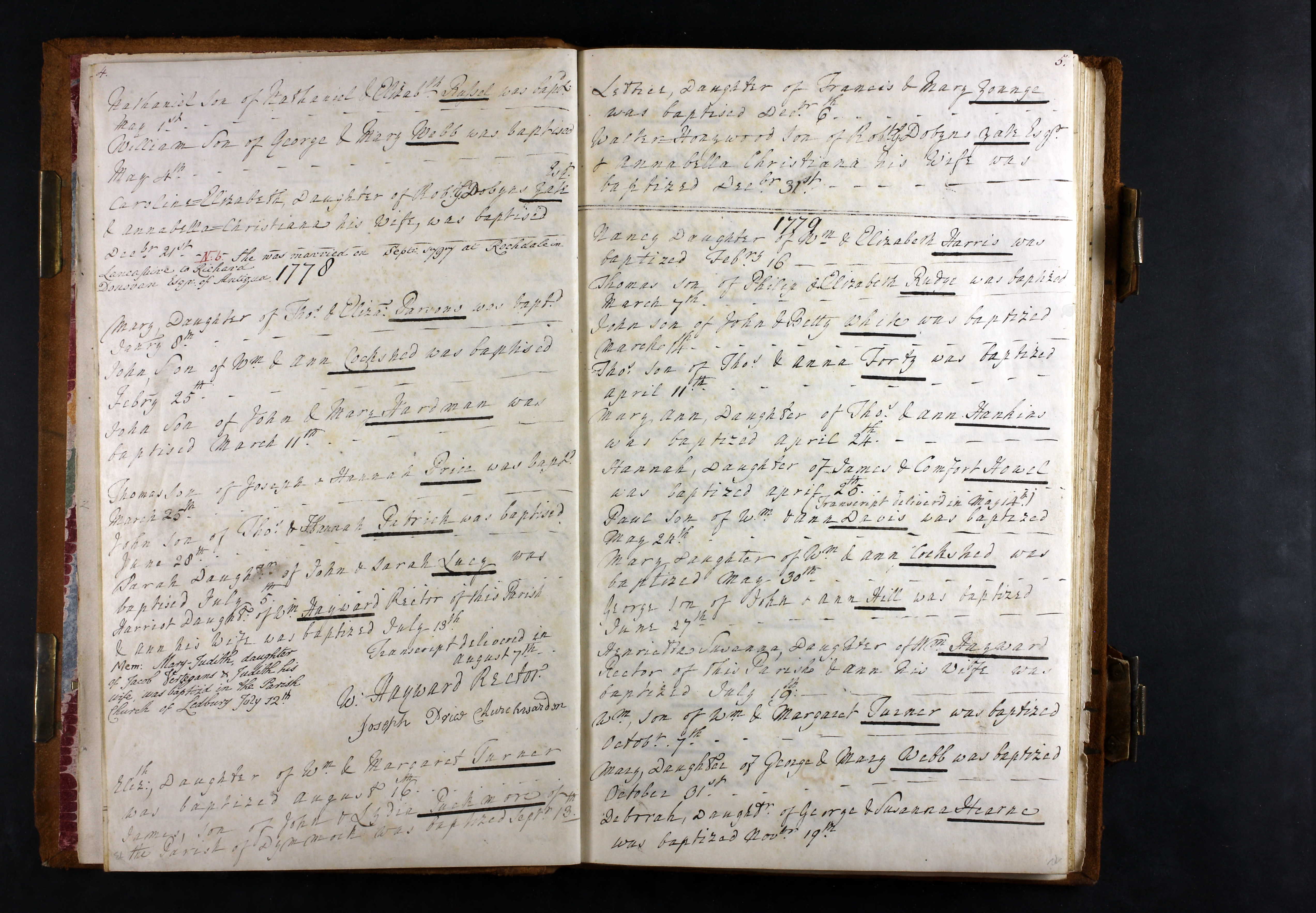
Their first child was baptised in Gloucester, and their second in Bromsberrow, where Nathaniel had taken a job as a servant in the household of Robert George DOBBINS-YATE.
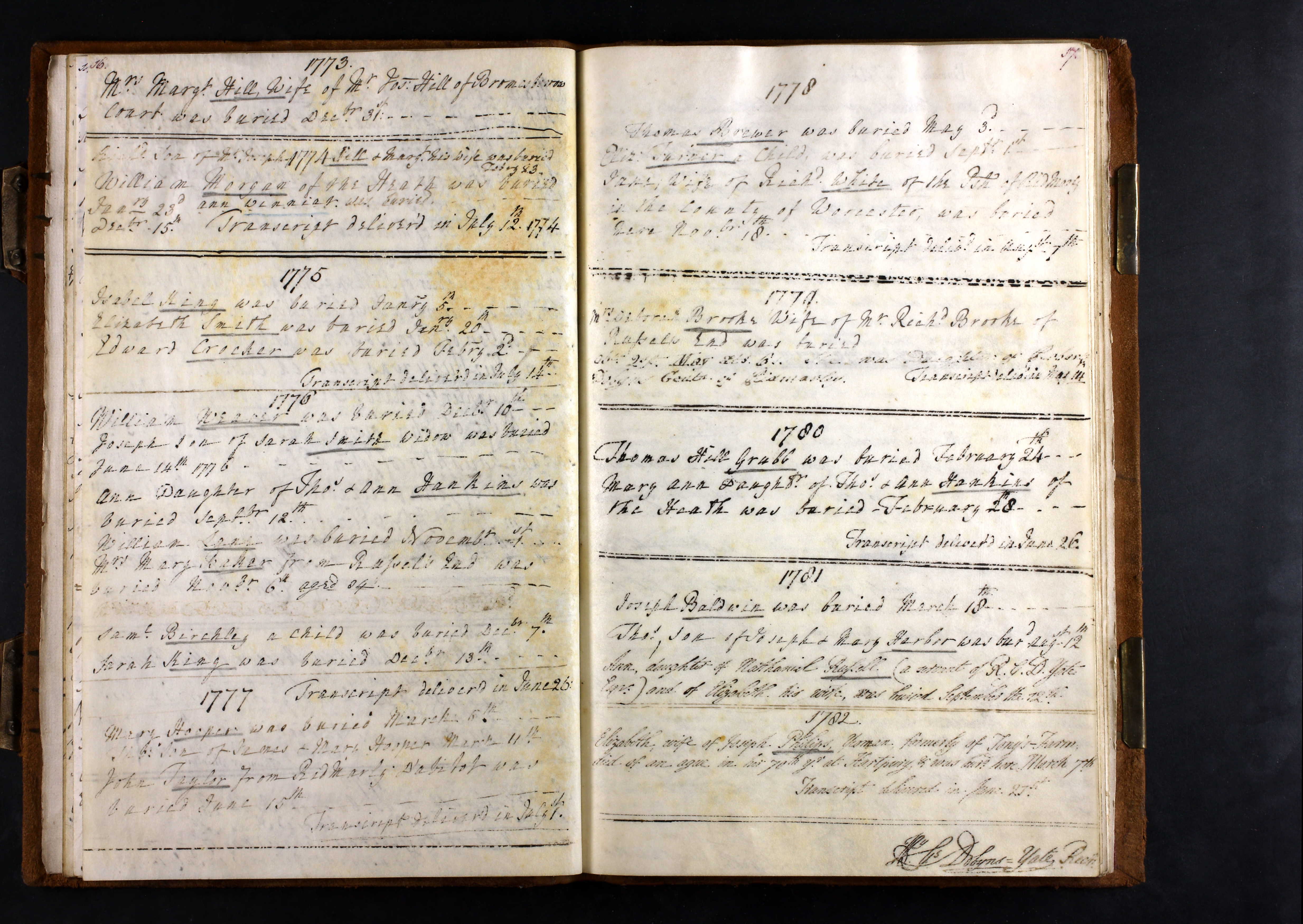
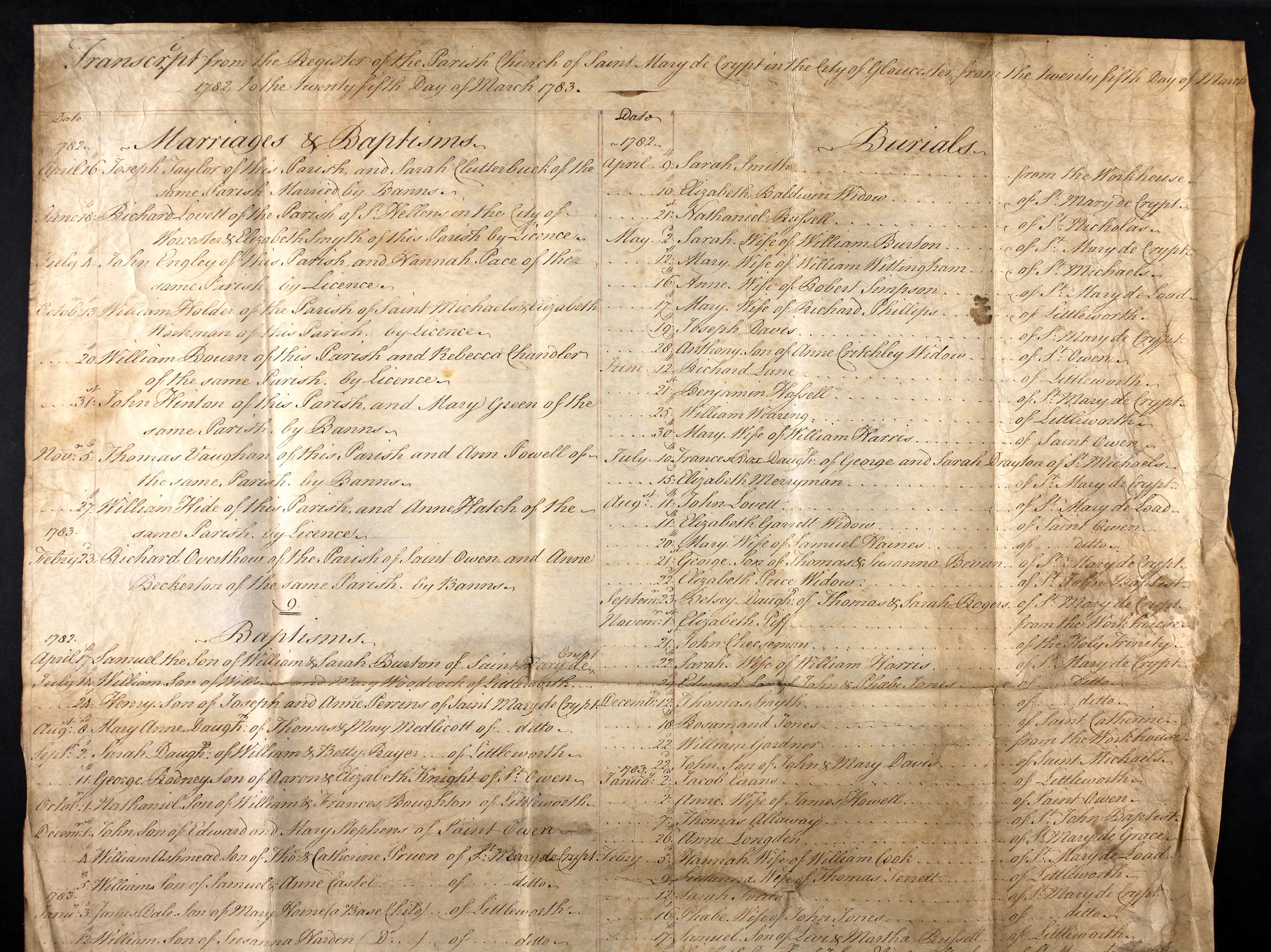
Nathaniel died in Gloucester in 1782, aged 32. When buried, at St Mary de Crypt in Gloucester, Nathaniel was given as being from St Nicholas which was being used as a hospital and where he may have been taken if ill or injured.
Other information
Almost certainly unrelated, but in 1779 a Nathaniel RUSSELL was listed as a prisoner of war in Dinan, in Britany, France, likely following capture during the American War of Independence. By all accounts the treatment of English prisoners was poor. A letter from Fougreres Castle, Ille-et-Vilaine, dated August 16th 1779 says: "In the first place we have a pound and a half of bread, such as is the cause of all the sickness, beef is but just enough for dogs, sometimes it amounts to half a pound a day, but more often to six ounces, sometimes we have peas, and those so bad that one half of them are as hard when they come out of the furnace as when first put in. The worst of usage in England for the prisoners is absolutely too good. The great havock it made in Dinan last winter [1778/1779] is astonishing! Thirty died of a day, in the whole about 1600. They were put into a cart, a pit dug, and were thrown in like dogs. We have nothing to lie on but straw full of vermin, which deprives us of rest. The beds we had at first are taken away, and we are now treated as if we were horses. We dread the thought of another winter, and expect nothing but to fall victimes to death." A Nathaniel RUSSEL was drawing a Royal Navy pension in 1814, so most likely this was the prisoner.